
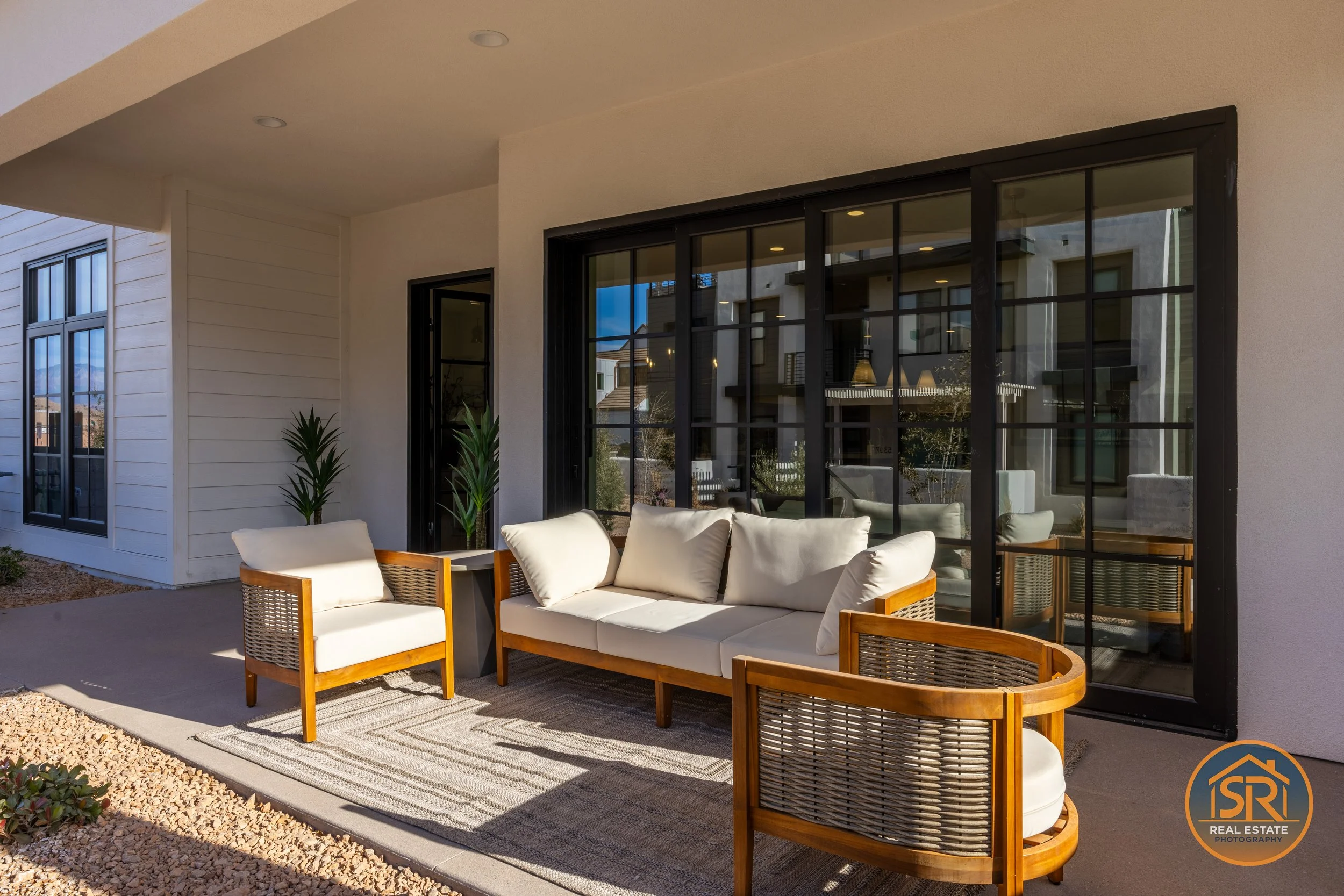
“Show the view” is an incomplete instruction. From where? Standing at the window, sitting on the patio, or above the roof? Those positions can describe very different experiences. Put the viewpoint into the brief before discussing how impressive the image should look.
Rewrite the request
Weak: “Get a mountain-view shot.”
Useful: “Please assess the actual outlook from the main living-room window. Include enough of the window or room to identify that viewpoint; do not imply a broader view than is visible there.”
Weak: “Make the backyard feel private.”
Useful: “Show the patio’s relationship to the yard and the actual adjoining context. Do not remove neighboring structures or invent screening.”
Weak: “Use the aerial as the view photo.”
Useful: “Use an aerial, if separately arranged, to explain setting. Request a ground-level image as well if the listing needs to show the outlook from a specific outdoor area.”
These are hypothetical brief examples, not claims about any property in the portfolio.
Fill in one card for each important sightline
- Standing or viewing position: ______.
- What the image needs to explain: ______.
- Context that should remain visible: ______.
- Related image needed to connect it to the home: ______.
- Proposed caption and fact-check owner: ______.
For example, an exterior detail can be attractive but fail to show where it sits. A second, wider frame may explain the connection more honestly than adding a sweeping caption to the detail.
Keep ownership and permanence out of an image-based inference. A visible wall does not, by itself, establish a property boundary. A landscape in the distance does not become part of the sale because it appears in the photograph. Ask the agent to verify those facts separately.
Walk the brief before photo day
Try the named position yourself. If the brief says “seated patio outlook,” look from a seat rather than only from the edge of the terrace. Note whether a railing, tree, neighboring roof or screen is part of that experience. The goal is not to hide those elements; it is to decide which frame explains the place clearly.
Then pair the view with an orientation image that shows how the viewer reaches it. A doorway, patio corner or recognizable window can connect the two photographs. If the position is inaccessible or the desired sightline is obstructed, flag that before the appointment and discuss a truthful alternative instead of leaving the photographer to guess.
The useful question is simple: would a person standing in the stated place recognize this as the same outlook? That is the standard the brief should serve. If aerial context is needed, discuss it when selecting services rather than treating it as an automatic substitute for a ground-level view.
From Sam Reed’s property photography portfolio; editorial illustration, not a Same-Day HDR sample or a case study of this article.