
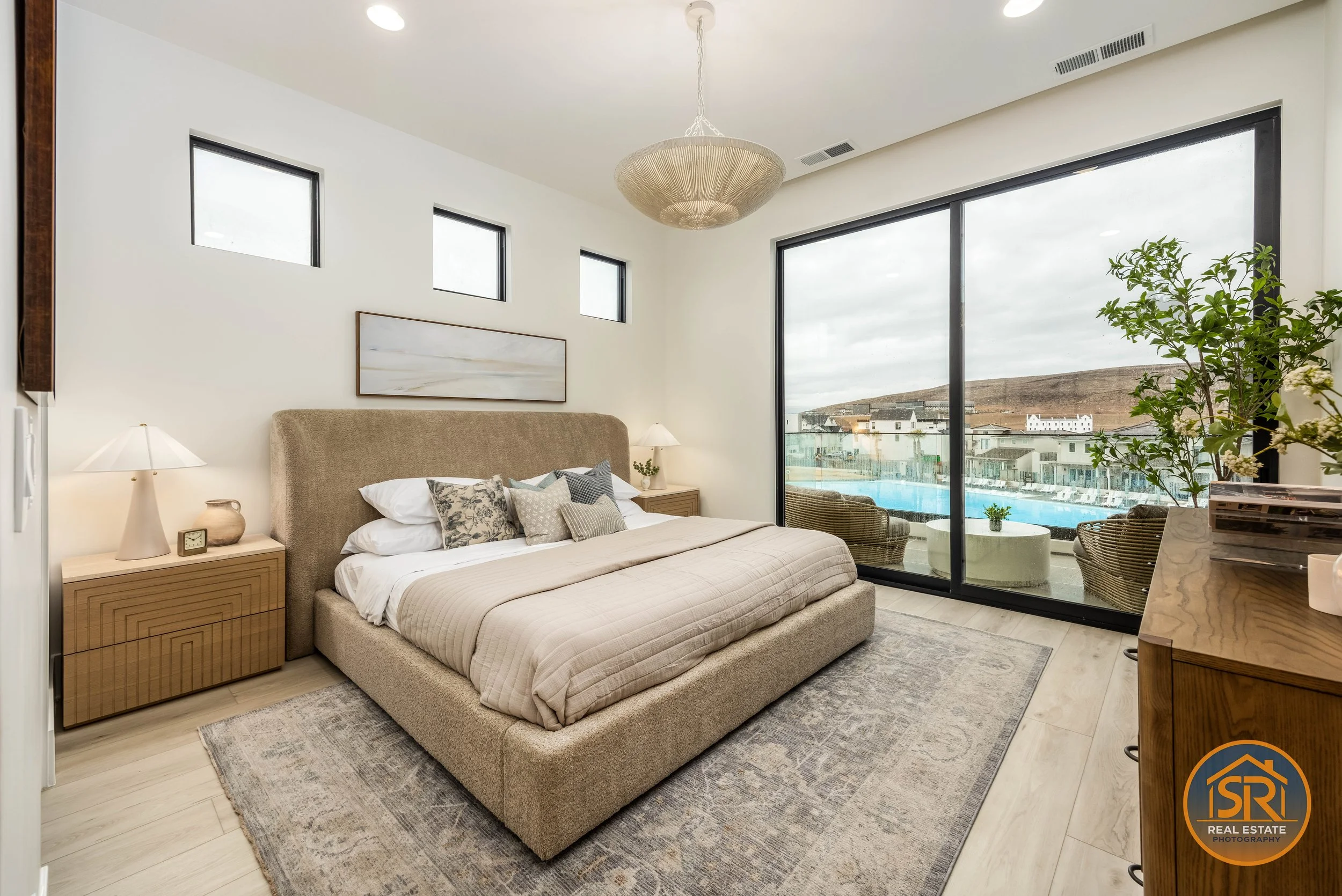
A neatly stacked bank statement is still a bank statement. Straightening it does nothing to protect the information on it. For an occupied-home shoot, give privacy its own inspection instead of treating it as the last item on a cleaning list.
The FTC’s business guidance recommends avoiding the collection of sensitive personal information that a business does not need. Applied to listing photography, a practical starting point is to keep unnecessary personal details out of the frame before capture. The worksheet below is a photography workflow, not a legal compliance checklist.
Pass one: have the occupant read the room
Work from the doorway around the visible surfaces. The occupant decides what is private and handles the items; the photography team does not need to inspect or copy the underlying documents.
- Identity. Examples: Mailing labels, certificates, name badges, family portraits. Action to record: Owner removed / owner chose to leave / unresolved.
- Routines. Examples: School calendars, travel plans, work schedules. Action to record: Owner cleared board or moved item.
- Accounts and access. Examples: Statements, password notes, key labels, entry instructions. Action to record: Owner stored privately; no details copied into shoot brief.
- Health and personal matters. Examples: Medication labels, appointment paperwork, private correspondence. Action to record: Owner put away; photographer told only the area to avoid if needed.
- Screens. Examples: Messages, video calls, digital photo frames, calendar displays. Action to record: Owner cleared or switched off display.
Pass two: inspect what the camera can see indirectly
Look into mirrors, reflective appliances, glass-fronted cabinets, and open doorways. A desk can be outside the main composition but still appear in a mirror. Check the delivered files at full size as well: the thumbnail grid is not the right place to decide whether a label is readable.
When something is missed, report its location without circulating the sensitive content again.
Unhelpful correction note
Copying the account number into an email so everyone knows which statement to remove.
Useful correction note
“File 014: personal document on the desk, lower right. Hold this image from publication while we resolve it. Please confirm the replacement filename.”
Finish with a decision, not a reassurance: each flagged image is approved, awaiting a corrected file, or excluded from the public set. “Probably too small to read” leaves the decision unresolved.
A five-minute handoff before the room is photographed
Choose one private storage spot outside the planned photography areas rather than moving personal paperwork onto a nearby counter. Ask the occupant to check a second time after the room is staged: shifting a chair or opening a door can reveal a surface that was previously hidden.
- Confirm who will review the delivered images before they are posted.
- Keep the review note limited to a filename, room and location in the frame, plus the decision needed.
- If a replacement arrives, check that file at full size and remove the superseded version from the set being prepared for publication.
If a room cannot be cleared, agree on what stays out of the frame before capture rather than assuming it can be fixed later. Contact Sam to discuss preparation questions without sending private documents or access details.
From Sam Reed’s property photography portfolio; editorial illustration, not a Same-Day HDR sample or a case study of this article.