
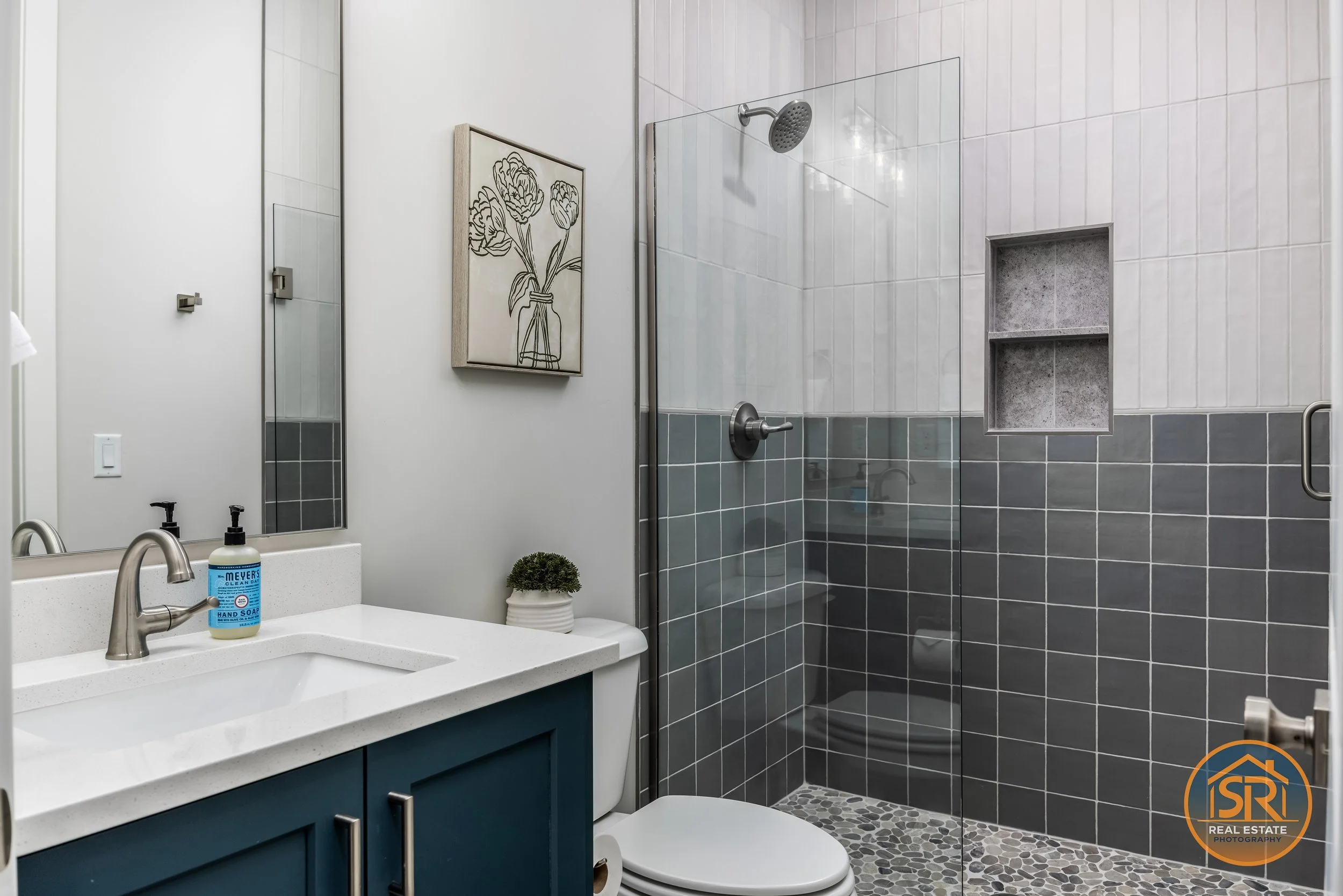
Try this before the appointment: stand at the bathroom entrance and look only inside the mirror. Ignore the sink. What other part of the home have you just added to the photograph?
That reflected area belongs on the bathroom checklist. Use three separate passes so that cleaning, privacy, and composition do not get mixed together.
Pass 1: Read the reflected background.
From the doorway, then from beside the vanity, identify every reflected doorway, shelf, and surface. Move personal paperwork or identifying items out of those areas. If a mirror reveals a bedroom, prepare the visible portion of that bedroom too. Keep a quick note of anything that cannot be moved.
Pass 2: Inspect the glass, not the room beyond it.
Look across the shower panel from the side, then toward it from the entrance. Check the handle area, lower edge, and overlapping panels for visible residue. Use the surface manufacturer's cleaning instructions, allow the glass to dry, and stop there. A photo appointment is not the moment to experiment with an abrasive or unfamiliar coating treatment.
Pass 3: Test the doors.
Compare safe open and closed positions. Does the main door hide the shower? Does the shower door cross the vanity mirror? Can a bench or niche be seen without a separate view? Record the problem rather than committing to a camera position. Leave the photographer room to solve it.
Copy this handoff card
Bathroom: [room identifier]
Must show: [layout or feature]
Reflected area to check: [hallway, closet, or adjoining room]
Door/access issue: [what moves, what must stay fixed, and who can help]
Example, not a photographed property: “Hall bathroom. Must show shower bench. Mirror reflects linen closet. Main door blocks part of shower when fully open; owner available to adjust it.”
That note is more useful than “make the bathroom look bigger.” It identifies the information the photograph needs to preserve and the obstruction that could hide it.
Before the photographer arrives
Keep a clear, dry path to the vanity and shower, and let the photographer know about any surfaces or fixtures that should not be moved. A quick check from the doorway can also reveal towels, toiletries, or personal items reflected from outside the room.
For help planning your property photography, contact Sam Reed Real Estate Photography.